
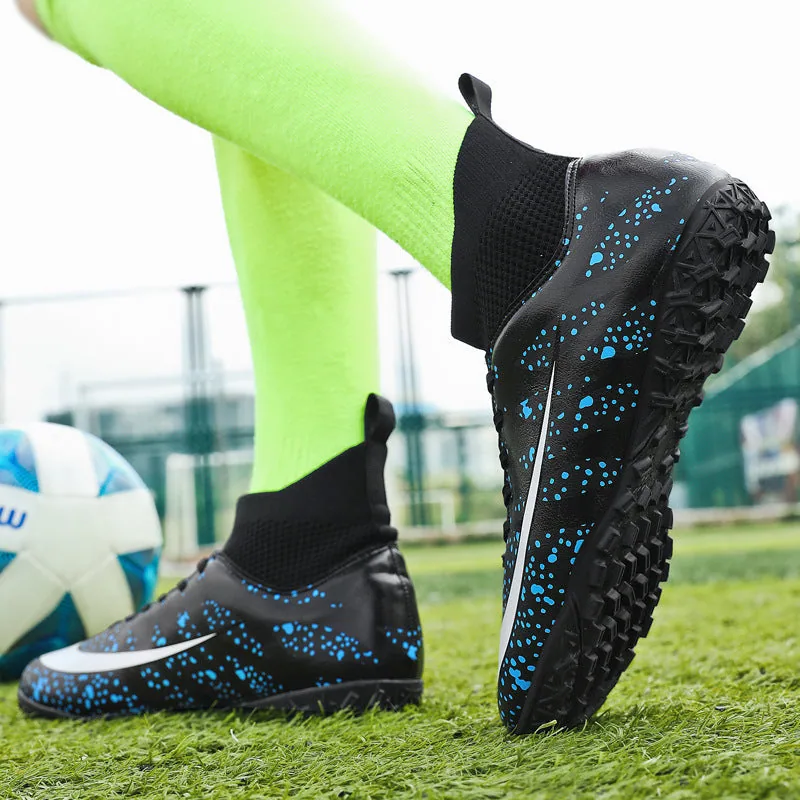
The two letters on a football boot describe its outsole, and that tells you which pitch it belongs on. Playing on the wrong surface is the fastest way to slip, lose traction, or pick up a knee or ankle injury.
FG — Firm Ground
The default outdoor boot. Studs are longer and fewer, designed for natural grass that is dry and reasonably firm. If you play most of your football on real grass in decent weather, FG is the right choice. They are also usable on artificial turf, though they will wear faster and bite harder than you want.
AG — Artificial Grass
Built for modern 3G/4G synthetic pitches. AG outsoles use more, shorter, and rounder studs to spread load across the surface, which reduces the pressure on your joints and lowers the risk of the boot catching in the turf. If you train weekly on artificial grass, this is the one to buy.
TF — Turf
Dozens of short rubber nubs instead of studs. TF boots are for older or shorter artificial turf, hard dirt, and gravel pitches — the surfaces where a studded boot is uncomfortable or not allowed. Grip is lower than AG, but so is the stress on your feet.
IC — Indoor Court
Flat, non-marking rubber soles for futsal and indoor courts. No studs at all, because the grip comes from the rubber compound against a smooth floor. Wearing outdoor boots indoors is usually against venue rules and will not give you the traction you expect.
How to choose
- Ask what surface you play on most often, not what you play on occasionally.
- If you split your time between grass and artificial turf, buy two pairs rather than one compromise pair.
- Junior players usually need TF or AG — school and club pitches are often synthetic.
- Fit matters as much as the sole: boots should be snug with a small amount of toe room, and you should not be able to slide your foot forward.
Our range covers men’s, women’s and kids’ football boots across all four sole types.