
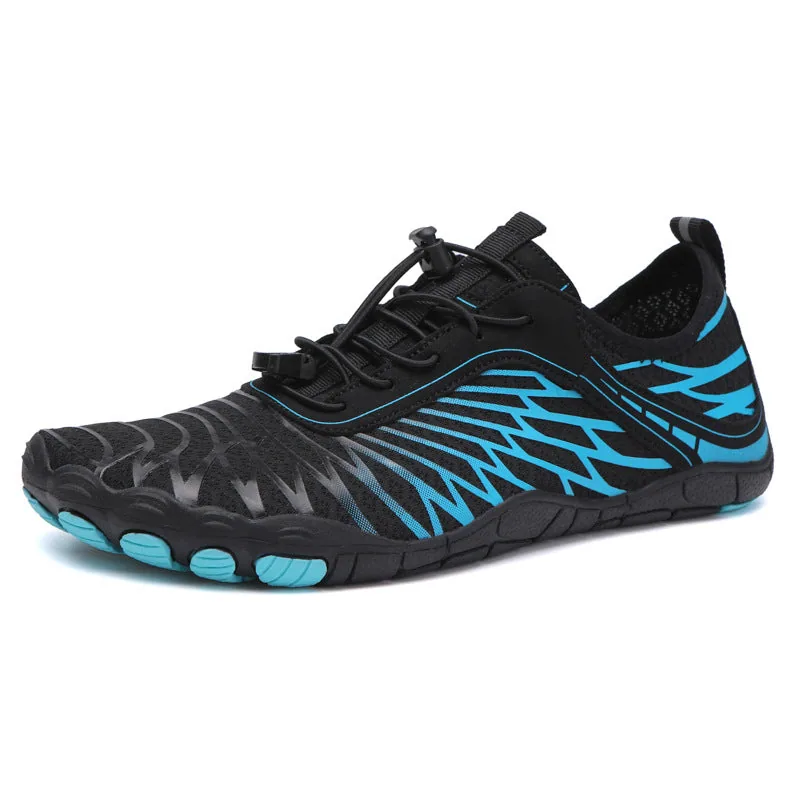
Water shoes are not just beach footwear. The reason they exist is drainage: a shoe that holds water gets heavy, rubs, and takes days to dry. If your day involves getting wet on purpose — or falling in by accident — they are worth having.
When water shoes help
- Rocky beaches and riverbeds. Barefoot is painful and slippery; a thin, grippy sole protects you without killing feedback.
- Kayaking, paddle boarding, canyoning. You need grip on wet rock and something that will not drag you down if you swim.
- Hiking trails with stream crossings. Quick-drying shoes mean you are not walking in a puddle for the next six hours.
- Boat decks and wet docks. Non-marking rubber and drainage matter more than cushioning.
What to look for
- Drainage, not waterproofing. Mesh panels and drain holes let water out. A waterproof shoe just holds it in.
- Wet grip. Look for a rubber compound described as non-slip on wet surfaces, with a tread pattern that sheds water rather than trapping it.
- Toe protection. If you are on trails, a rubber toe bumper saves you from roots and rocks.
- Fit. Water shoes should be snug — a loose shoe becomes a blister machine when wet. Many people go half a size down from their sneaker size.
When a normal sneaker is fine
If you are staying dry, a regular trainer is better: more cushioning, more support, and far more comfortable over distance. Water shoes trade cushioning for drainage, so they are the wrong tool for a long dry hike.
Looking after them
Rinse with fresh water after saltwater or river use, stuff with newspaper and dry away from direct heat. Never put them in a tumble dryer — heat distorts the sole and shrinks the upper.
Browse the men’s and women’s water shoe ranges to see the current models.